|
History
The Eighth Wonder of the World was discovered in 1974 by Yang
Peiyang, a peasant farmer, whilst digging for a well in the fields
at Xiyang. At a depth of 4 metres the farmers found pottery
fragments, followed by the pottery torso of a man.
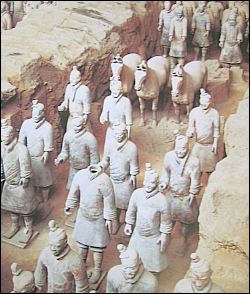
Archaelogists arrived to begin excavations and they discovered that
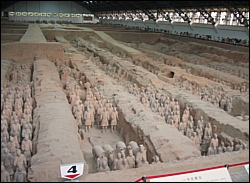
the site consisted of 3 pits, filled with terracotta statues and
horses, and was infact the mausoleum of the Emperor Qin Shihuang.
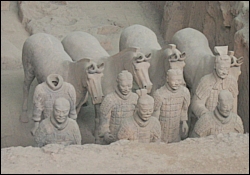
More than 8000 warriors and horses were unearthed, along with over
100 wooden chariots. It appears that Emperor Qin ordered his
mausoleum to be constructed prior to his death, taking over 20 years
to complete.
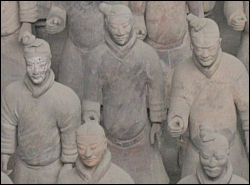
When the warriors were originally made, each was modelled on a
fellow soldier, giving each one its own individual size, style and
facial expressions. They were also painted with plant extracts, but
on excavations, these colours faded within a few days, reverting the
warriors to their original colours.
When the archaelogisits discovered the pits containing the warriors,
they found the bodies to be in many pieces, the pits having been
raided and ransacked by opposing forces, the weapons plundered and
the warriors smashed. Only one warrior, a kneeling archer, remained
totally intact. The task of restoration was immense and a project
that will continue for many years to come, as many of the lines of
warriors are still totally covered awaiting excavation.
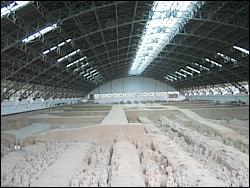
The excavation site is now covered by exhibition halls, preventing
the modern day pollutants from attacking and further damaging these
ancient wonders. This also allows millions of visitors the chance to
view this magnificent piece of Chinese History!
|